












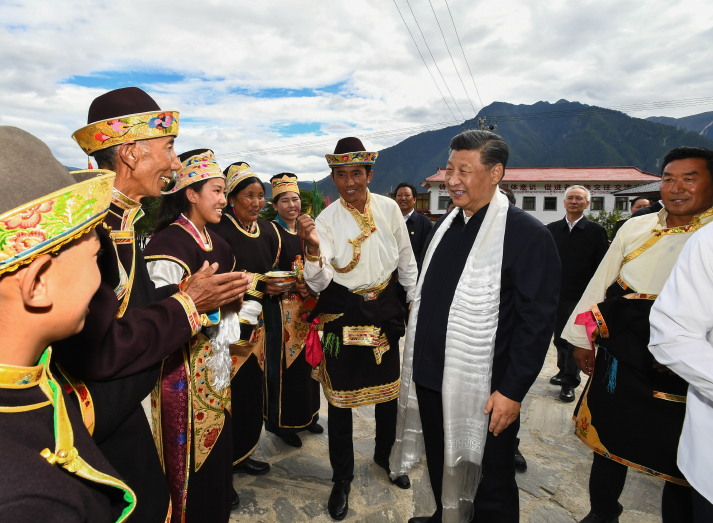
Tibet is considered a sensitive area. The region is also being watched with great interest because of the many conspiratorial activities that the United States has done and is doing to separate the Chinese-occupied territory from China. The United States has been using pro-Dalai Lama Tibetan refugees for its own purposes. China also attaches great importance to this area. The importance China attaches to Tibet is reflected in its investment in the region’s overall development and in the recent visit of Chinese President Xi Jinping to Tibet.
President Xi Jinping has stressed the importance of stability, development, ecological conservation and border security in Tibet Autonomous Region. Xi visited Tibet from July 21 to 23 for the 70th anniversary of its peaceful liberation. This is the first time for a top Chinese leader to take part in such a celebration in the history of the Party and the country.
Free of extreme poverty, miracles of development
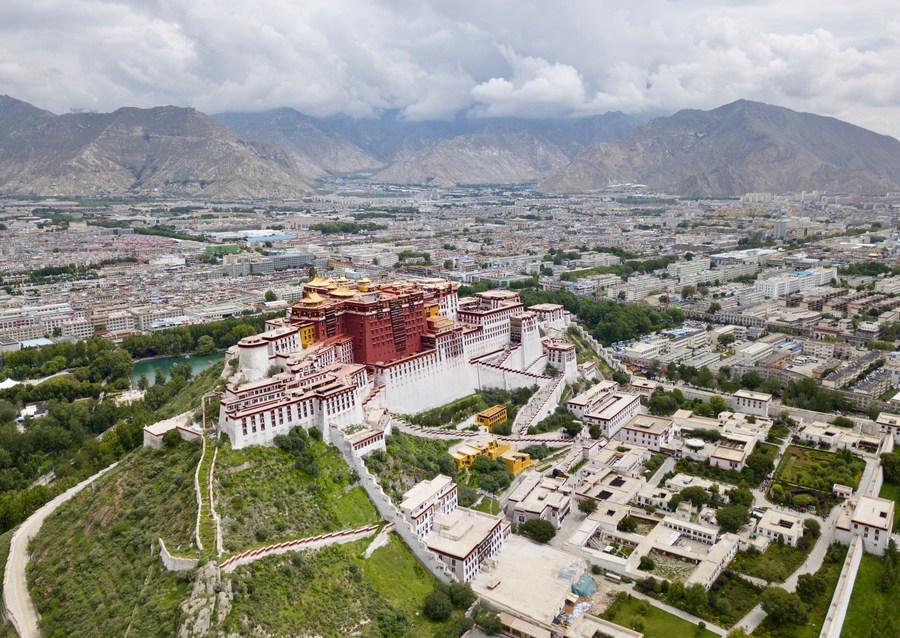
China’s Tibet Autonomous Region is now free of extreme poverty. There are a total of 74 extremely poor districts in Tibet, which have now been upgraded. The total income of Tibetans living in extreme poverty has risen from 1,499 yuan (Chinese currency) in 2015 to 9,328 yuan in 2019. More than 600,000 people have risen above the poverty line set by the United Nations following the development of specialized industries to lift the poor out of poverty in Tibet. It has been 70 years since Tibet became independent . On May 23, 1951, the 17-Article Agreement was signed by the central government and the local government of Tibet on the peaceful liberation of Tibet. In March 1959, democratic reform was launched in Tibet and feudal serfdom was finally abolished. In September 1965, the First Session of the First People’s Congress of Tibet was convened, proclaiming the founding of the Tibet Autonomous Region.With regional ethnic autonomy established and through the socialist transformation of agriculture and animal husbandry, Tibet embarked on the road of socialism.
China’s central bank will issue a set of commemorative coins to commemorate the 70th anniversary of the peaceful liberation of Tibet. The set will contain one gold coin and one silver coin, both legal tenders, according to a statement from the People’s Bank of China. Both coins feature the national emblem, the country name and year of issuance on the obverse, while the reverse is inscribed with combinations of different pictures, denominations, “1951-2021,” and a line that reads “the 70th anniversary of the peaceful liberation of Tibet” in both Chinese and Tibetan languages.
Since 1978, the Communist Party of China Central Committee has held seven national meetings on Tibet to make major decisions and plans for the region. Over the past 70 years, the central government has introduced many favorable policies for the region, covering tax and finance, infrastructure, industrial development, education, health, cultural preservation and environmental protection.
In 1951, Tibet’s regional GDP was approximately 129 million yuan. Last year, its GDP exceeded 190 billion yuan. Since its peaceful liberation, the region has gradually established a comprehensive transport network of highways, railways, air routes and pipelines. Highways totaling 118,800 km in length have been built in Tibet.
The region has also made coordinated progress in improving its environment, investing a total of 81.4 billion yuan in the area by the end of last year. In 2020, the forest coverage reached 12.3 percent, and the comprehensive vegetation coverage of natural grassland grew to 47 percent.
By the end of 2019, all registered poor residents and counties in Tibet had shaken off poverty, eliminating absolute poverty in the region for the first time in history.
Before 1951, more than 90 percent of Tibetan residents did not have private housing. In 2020, the per capita living space of farmers and herders reached 41.46 square meters, and that of urban residents reached 33.4 square meters. The average life expectancy has increased from 35.5 years in 1951 to 71.1 years in 2019.
Education has also witnessed tremendous advances. In old Tibet, there was not a single proper school. The illiteracy rate exceeded 95 percent. From 1951 to 2020, the central government invested 224 billion yuan in Tibet’s education. Students now benefit from 15 years of publicly funded education in the region.
Comparison Old to New
Before 1959, there were no schools in Tibet. After more than 51 years, Tibet has succeeded in establishing a local education system. According to a statistic, the school enrollment rate for children is 99.5 percent. This is in primary education. Education up to school is free. Chinese and Tibetan languages are taught here. Since 1985, Tibet has provided free food, shelter and education to the children of farmers and shepherds. Before 1959, there were three government medical institutions and a handful of private clinics in Tibet.
After 51 years of development, the medical and health network, the fusion of ancient Tibetan and Chinese medicine, and medicine in the West have taken over the entire country, with Lhasa dominating. Due to rapid development in health, the life expectancy in this sector has increased from 35.6 years in 1950 to 68.17 years now. Health facilities have increased at least 35 times since then.
The old age home here has all the facilities. From 1980 to 2019, about one thousand projects have been implemented. The Chinese central government has invested billions of Chinese yuan in these projects. Highways have been built by digging tunnels in roads, railways, big mountains and hills.
Before 1959, there was no modern industry in Tibet. At present, more than 20 modern industries including energy, textile, machinery, mining, construction materials, chemical, pharmaceutical and printing have been established here. Tibet’s energy, transportation and other basic industries are flourishing. Small industries have become big industries in Tibet. Many industries are flourishing, including tourism, postal and telecommunications, hotels and catering, culture and entertainment.
Rich in Natural Resources
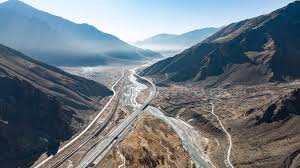 The geography of Tibet is amazing. Tibet is divided into three parts: the Northern Tibet High Plain, the Yarlung Jangbo River Region, and the Eastern Tibet Valley. The Tibet Autonomous Region is located in the Qinghai-Tibet mountain range in western China. It is surrounded by the Xinjiang Uyghur Autonomous Region, Qinghai, Sichuan and Yunnan provinces. It shares a 4,000-kilometer border with Nepal, India, Bhutan and Myanmar.
Tibet is rich in natural resources. Tibet is one of the five largest waste lands in the world, covering an area of 88.93 million hectares. In addition, the forest covers 178.36 million hectares of land and 2.288 billion cubic meters of living trees. Buddhism is predominant in Tibet. But the people here also believe in Bonism, Islam and Christianity. Generally, Tibetans, Monbas and Lobas are Buddhists, while Hui people are Muslims and Naxalites, and some are Tibetan Catholics. There are a large number of Buddhist monks and nuns in Tibet. Of the 1,700 places of worship, 88 have Bon temples, four mosques, and a Catholic church. Tibet is an integral part of China. Tibet’s indigenous peoples have been given autonomy. There is an autonomous system of governance. The permanent population of Tibet is about 4 million. Of these, 92 percent are Tibetans and 8 percent are from abroad.
Tibet is located at the highest latitude in the world. That is why Tibet is called the ‘roof of the world’ and the ‘third pillar of the world’. Of the various hills here, more than 50 are 7,000 meters high and 11 hills are 8,000 meters high. Located at an altitude of 4,500 meters, northern Tibet consists of the high plains of Eastern Gari Province and the Midwestern Province of Nguyen. This high plain is the main agricultural and grassland area of Tibet and is home to most Tibetans.
History of Tibet
The history of Tibet is also rich. Tibet was called Jangbo, or Zhang for short, in ancient times. During the Tang Dynasty (618–907) and the Song Dynasty (960–1279), its name was changed to Tubo. Also, in the Greek Dynasty (1279-1368), Tisang was renamed, and in the Qin Dynasty (1644-1912), it was changed to Tubatin. During the reign of Queen Qinxi (1661–1722), the region came to be known as Tibet. Archaeological excavations have uncovered human settlements in Tibet thousands of years ago. It is said that there was a Janajati settlement in this area 4,000 years ago. Within a few centuries, these small tribes gradually merged with other tribal groups. By the 4th century BC, three powerful tribes had formed an alliance: the Sangsung, the Yarlung, and the Sumpa. In the 7th century, King Santsen Gambo began the Tubo rule by moving these tribes to higher plains. After his marriage to Princess Wencheng of Tang, political and cultural ties were established between Tibet and the Tang dynasty. Later, Princess Jincheng of Tang married a Tibetan king, which led to the establishment of a ‘mama-nephew’ relationship between Tubo and Tang.
In 1368, the Ming Dynasty (1368–1644) overthrew the Yuan Dynasty and gained control of Tibet. It implemented the Tsang Itinerant High Command and the Mdu-Khams Itinerant High Command in Central and Eastern Tibet, respectively. In 1791, the Qing government mobilized the army, saying that the affairs of Tibet should be jointly administered by the Grand Minister’s Residence and the Dalai Lama. In 1973, the Qing court issued a royal ordinance for the best administration of political, economic and religious affairs in Tibet. After the Qing Dynasty was overthrown by the 1911 revolution, the Republic of China was established in 1912 (1912-1949). On October 1, 1949, the People’s Republic of China was established.
On May 23, 1951, an agreement was reached between the central government and the local government to establish Tibet as an independent region. And, in 1956, Tibet was established as an autonomous region.
Now the Tibetans are living a very advanced life. All-round development of the people is taking place. From slavery to socialism, the three upper echelons of old Tibet, government officials, aristocrats and high-ranking lamas, and their entourage, accounted for about 5 percent of the total population. However, all the lands, pastures, forests, mountains, bogs and all the domestic animals in Tibet were owned by them. Slaves and slaves, who held 95 percent of the shares, had no means of production or freedom. On May 23, 1951, the Central Government of China and the Government of Tibet signed a 17-point agreement on the peaceful liberation of Tibet. Since then, the people of Tibet have been freed from the cycle of imperialist occupation and have embarked on a bright path of unity, progress and development with other ethnic groups in China. In March 1959, democratic reforms were implemented in Tibet and feudal slavery was finally abolished. The first session of the first People’s Congress of Tibet began in September 1965. The Convention announced the establishment of the Tibet Autonomous Region. Through regional ethnic autonomy and socialist transformation in agriculture and animal husbandry, Tibet paved the way for socialism. In the last 70 years, the central government has implemented useful policies for the region. Many useful policies have been formulated on taxes and finance, infrastructure, industrial development, education, health, cultural protection and environment protection. In 1951, Tibet’s regional GDP averaged 129 million yuan. Peaceful Liberation Tibet has gradually established an extensive transport network of highways, railways, airways and pipelines. A total of 118,800 kilometers of highways have been built in Tibet. Tibet has also made coordinated progress in improving the environment.Peaceful Liberation Multidimensional Human Development has become Tibet’s greatest historical achievement .
One China Policy, Nepal and US Conspiracy
The world has witnessed that modern Tibet is an integral part of the Communist People’s Republic of China. Tibet is also the symbol of one country and two geographical modalities. Just as no part of a human body can be separated, so Tibet can never be separated from China. But ironically, the US and the West are not only always blaming China for the Tibet issue, they are playing it as a strategic weapon to intimidate and persecute China unnecessarily.
An important law on Tibet recently approved by the United States is one such example. The recent US public policy on Tibet is proof that the United States is still pursuing its grievances against China. The Tibet Policy and Support Act 2020, which came into force after being signed by former President Donald Trump, states that it supports Tibetans. The law is said to have paved the way for a ban on Chinese officials appointing exiled religious leaders as successors to the Dalai Lama. Such an interventionist US policy in another country is in itself an example of the US’s hegemonic attitude towards China. China has said Tibet is its internal affair and warned that any move that could hurt its interests could further strain US-China relations. The latest new law issued by the United States covers the issue of Tibetans entering Nepal seeking asylum from China, which the United States has been interested in for years, and the issue of providing identity cards to Tibetan refugees who have been living in Nepal for a long time. In it, the US Secretary of State states that Tibetans entering Nepal seeking asylum should be asked to respect Nepal’s agreement with the UN refugee agency to provide safe passage to third countries. This means that the fact that the US is trying to play with the Tibetan refugees coming to Nepal from Tibet, which is geographically connected to Nepal, is as clear as the sun. Last year, eight lawmakers, including two co-chairs of the US House of Representatives on human rights, wrote letters to Nepal’s ambassador to the United States seeking asylum and expressing concern over Nepal’s deportation of six Tibetans.
A new law issued by the United States states that the Secretary of State must play a role in ensuring that long-term refugees in Nepal receive an identity card and participate fully in Nepal’s economic and social activities. This literally means keeping Tibetan refugees in Nepal and the fact that the US is trying to weave the conspiracy against China through the Tibetan refugees in Nepal.
The US policy and intention to make placards for Tibetan refugees is seen as a character in the US parade against China on Nepal’s ground. This is a trump card of the wrong policy of the US to attack China by setting up base in Nepal. The new US policy calls for 6 million in aid each year for Tibetan refugees in India and Nepal from 2021 to 2025.
There have been repeated reports of the United States failing to care for some of its poorest citizens. But the United States has been reluctant to invest in the care of Tibetan refugees in order to alleviate the suffering of its people. The money will be spent on Tibetan culture, education, language and the development of a new generation of leadership.The US increasing its investment in Tibetans to attack China in this way is a failed attempt by the US to fight against China. The fact that Nepal should be very careful in this regard is that Nepal should be able to refuse the American maneuvers and attempts to make Nepal a playground against China.
There is a 1,414 km long border between Nepal and China. The entire territory bordering China is Tibet. Although Nepal has been committed to the one-China policy, China has a special security interest in Tibet. In it, Beijing has been analyzing the pro-independence Tibetan activities that have taken place in Nepal at different times on the side of some western countries. This is also an open secret reality.
It is Nepal’s duty to fulfill China’s aspirations as a good neighbor. That is why in 2005 the government led by Prime Minister Sher Bahadur Deuba closed the Dalai Lama’s liaison office in Nepal. Nepal had taken such a step because the US and the West had misused the Dalai Lama’s liaison headquarters in Nepal as an arena for maneuvering against China. The Nepali leaders also reiterated their commitment to the one-China policy during a meeting with a delegation led by the Deputy Minister of the International Department of the Chinese Communist Party, who paid a surprise visit to Nepal after the dissolution of the House of Representatives. Coincidentally, the House of Representatives of Nepal has been reconstituted for the second time and with the majority of the restored House of Representatives, Nepali Congress President Sher Bahadur Deuba has become the Prime Minister of Nepal. Now the Americans can put pressure on Nepal’s Prime Minister Deuba to irritate China. But of course, no Nepali prime minister committed to a one-China policy can go against China under US pressure.
At Last, Nepal-Tibet relations are historic and glorious. Modern Tibet and Nepal should contribute from their respective positions to timely modify and strengthen this relationship. For Nepal, this year’s anniversary of the independence of the Chinese territory of Tibet is good news. Therefore, Nepal must wish Tibetan Independence Day. May Nepal-Tibet relations be immortal !. May modern Tibet take a new leap in prosperity and development in the days to come !